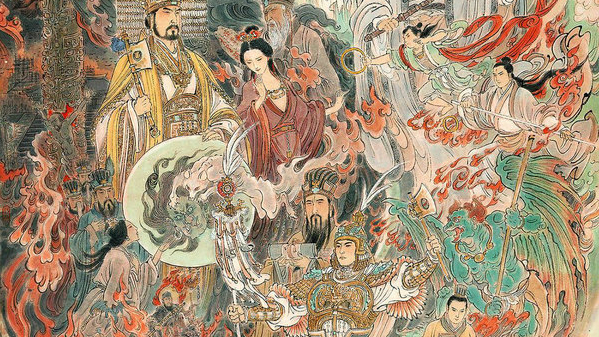
Investiture of the Gods
Introduction
The Investiture of the Gods, also known as Fengshen Yanyi, is a classic Chinese novel from the Ming Dynasty (1368-1644). It combines elements of history, mythology, and folklore to narrate the story of a rebellion against an oppressive rule and the subsequent creation of a new order. The novel is known for its rich tapestry of characters, including both historical figures and mythological beings, and has inspired countless adaptations in various media.
Historical Context and Literary Significance
The novel is set during the transition from the Shang Dynasty (c. 16th century-11th century BC) to the Zhou Dynasty (c.11th century-256 BC), a period marked by political turmoil and supernatural occurrences. It blends historical facts with myths and folklore, creating a narrative that is as entertaining as it is educational. The Investiture of the Gods is considered one of the most significant works of Chinese literature and has had a profound influence on Chinese culture, inspiring numerous adaptations in literature, theater, and film.
Characters and Themes
The story revolves around a series of battles between the virtuous Ji Fa, later King Wu of Zhou, and the tyrannical King Zhou of Shang, influenced by the malevolent fox spirit Daji. Key figures include Jiang Ziya, an elder strategist who plays a pivotal role in the downfall of the Shang dynasty, and Nezha, a rebellious deity known for his youthful bravado and powerful transformations. Themes of loyalty, betrayal, and the struggle between good and evil are prevalent throughout the novel.
Modern Adaptations
Film and Television
The Investiture of the Gods has been adapted into numerous films and television series, often focusing on the more fantastical elements of the story. Recent adaptations have taken advantage of advanced visual effects to bring the novel’s epic battles and mystical creatures to life. These adaptations often aim to stay true to the novel’s original themes while making the story accessible to modern audiences.
Animation
Chinese animation has found fertile ground in the novel's rich narrative. Films such as Ne Zha and Jiang Ziya: Legend of Deification have reimagined key elements of the story, focusing on the coming-of-age and moral struggles of its characters. These films have been hugely successful domestically and internationally, reflecting a growing interest in Chinese mythology and cultural narratives.
Theater and Performance
Traditional Chinese opera and contemporary theater have also drawn from the Investiture of the Gods, utilizing its dramatic narrative and diverse characters to create engaging performances. The novel's integration of music, drama, and mythology makes it a perfect fit for theatrical adaptation, allowing audiences to experience the grandeur of the story in a live setting.
Influence on Popular Culture
Beyond traditional adaptations, the novel has influenced a wide range of cultural media, including video games, comics, and literature. These modern interpretations often bring new perspectives to the ancient tales, appealing to young audiences and keeping the stories alive in the cultural consciousness.
Cultural Impact
The Investiture of the Gods continues to be a significant cultural touchstone in China and beyond. Its characters and stories are deeply embedded in Chinese folklore and continue to influence modern storytelling. The novel’s exploration of moral and ethical dilemmas remains relevant, offering insights into human nature and the complexities of leadership and governance.








